

Dummy data generator
Dummy data that still adds up.
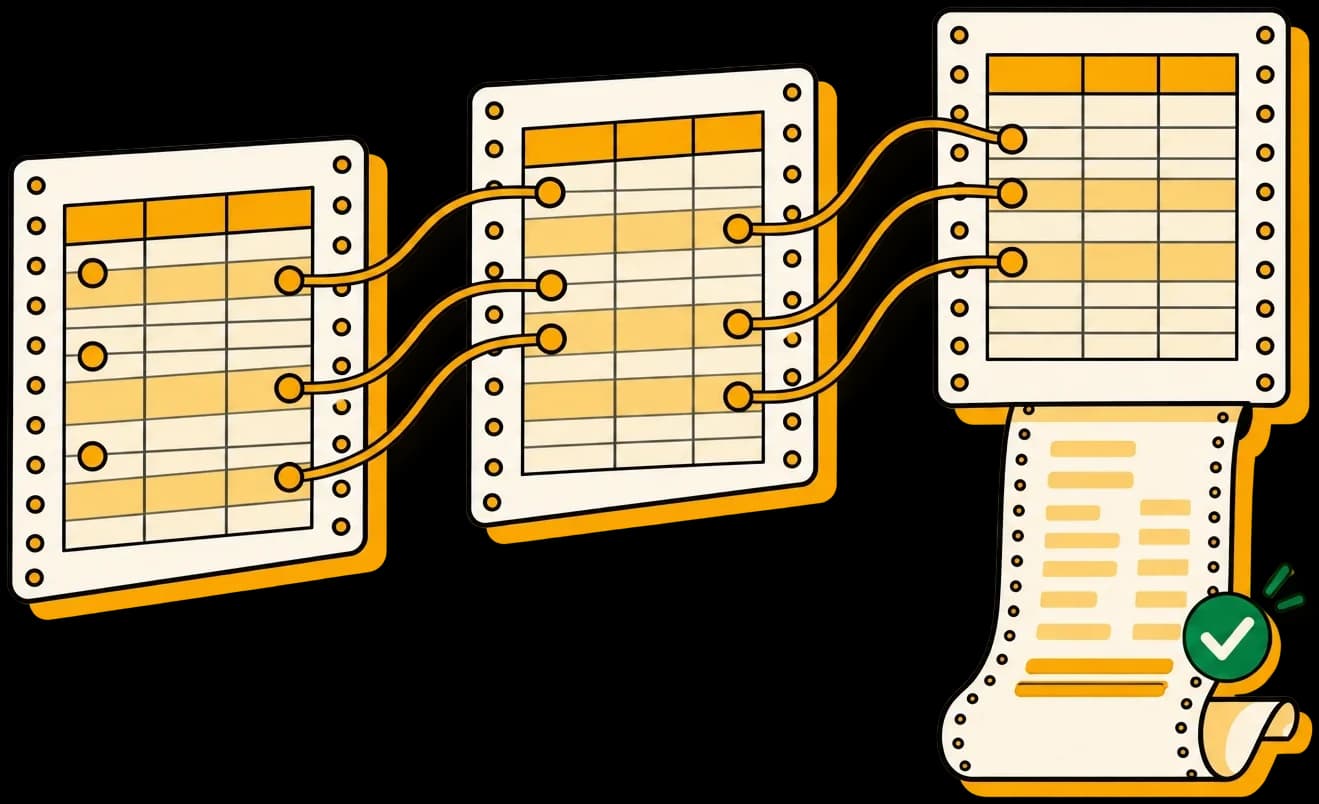
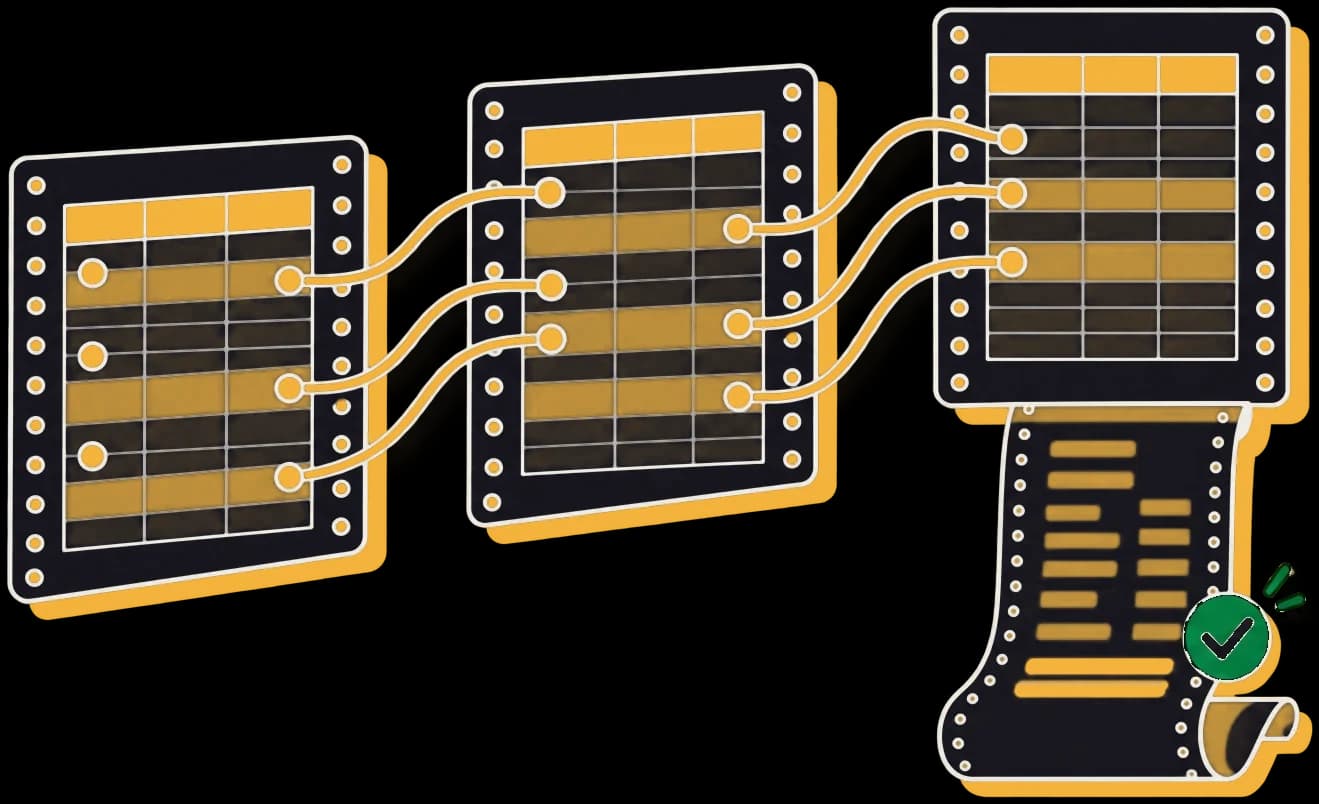
Misata is a dummy data generator for connected tables. Describe what you need, such as customers, orders and payments for a small online shop, and you get CSV, Excel, SQL or Parquet files where every order belongs to a real customer, every date falls in order and the totals reconcile. Or download one of twelve free sample databases that are ready now.
What usually goes wrong
Dummy data fills a prototype, a dashboard mockup, a spreadsheet template or a tutorial before real data exists.
One flat table of random rows
Fine for a list view, useless the moment a chart groups orders by customer, because the IDs do not line up.
Numbers with no shape
Uniform random revenue makes every month look the same, so the dashboard shows nothing worth looking at.
Copying a real export
Puts real names and emails into a file that ends up in a deck or a public repo.
What you get instead
Tables that join
Every foreign key resolves, and each dataset ships with the check that proves it.
Shape you choose
Seasonality, growth, a bad month, a skewed category mix: say it and the rows follow it.
Ready in every format
CSV, Excel, JSON, SQL for seven databases, SQLite, DuckDB and Parquet from the same dataset.
A request that works
A small online shop: 400 customers, 3,000 orders over 2025 with a December peak, order items, and payments, with about 3% of orders refunded.
Four ways to get it
In your browser
Describe it in Misata Studio, shape it, and export. Two complete builds a month are free.
Try this promptFrom your AI assistant
Connect the MCP server to Claude, Cursor or VS Code and ask. No key needed to start.
Connect the MCP serverDownload one now
Twelve free multi-table sample databases, and premium ones with the ground truth inside.
Browse datasetsIn Python
The open-source library: pip install misata, MIT licensed, runs offline.
Read the docsHow the approaches compare
| Random-value library | Form-based generator | Asking a chatbot for rows | Misata | |
|---|---|---|---|---|
| Realistic single values (names, emails, addresses) | ||||
| Several tables whose keys always join | ||||
| Declared totals and rates come out exact | ||||
| Same rows every run (seeded) | ||||
| Shows a check of what it produced | ||||
| No code needed |
General approaches, not specific products; individual tools vary. A dash means some tools do it, or it takes work.
Questions
What is the best dummy data generator?
It depends on the shape you need. For a single table of names and emails, any random-value library or form-based generator works. When the data spans several tables that must join, or the numbers must tell a particular story, use a generator that keeps foreign keys intact and lets you declare the outcome. Misata is built for that case and shows the check that every key resolves.
Can I get dummy data without signing up?
Yes. The free sample databases on misata.studio/datasets download directly with no account: retail, e-commerce, SaaS, credit risk, manufacturing, healthcare and more, each with several connected tables.
Is it free?
The twelve sample databases are free to download with no signup, under CC0. Misata Studio gives every account 20 credits a month, which is two complete builds, with no card. The MCP server needs no key or account for datasets the assistant designs itself, and the Python library is open source under MIT.
Is any of it real data?
No. Every row is generated from a specification. Nothing is copied from, sampled from or trained on a real dataset, so there is no personal data in it and nothing to scrub.