

Test data generator
Test data your tests can trust.
Misata generates relational test data from your schema: paste CREATE TABLE statements or describe the tables, and get rows where every foreign key is valid, dates are in order and any rate you declare is exact. The same seed gives identical rows every run, so a fixture never drifts, and the SQL export loads into Postgres, MySQL, SQLite, SQL Server, Oracle, BigQuery or Snowflake.
What usually goes wrong
Test data seeds a development database, backs an integration test or a CI fixture, and exercises the edge cases production has.
Insert order failures
Children inserted before parents, or keys that point at nothing, and the seed script dies on the first constraint.
Fixtures that drift
Random data changes every run, so a failing test cannot be reproduced.
Only happy paths
Clean data never exercises the null, the duplicate or the out-of-range value your code has to survive.
What you get instead
Reads your schema
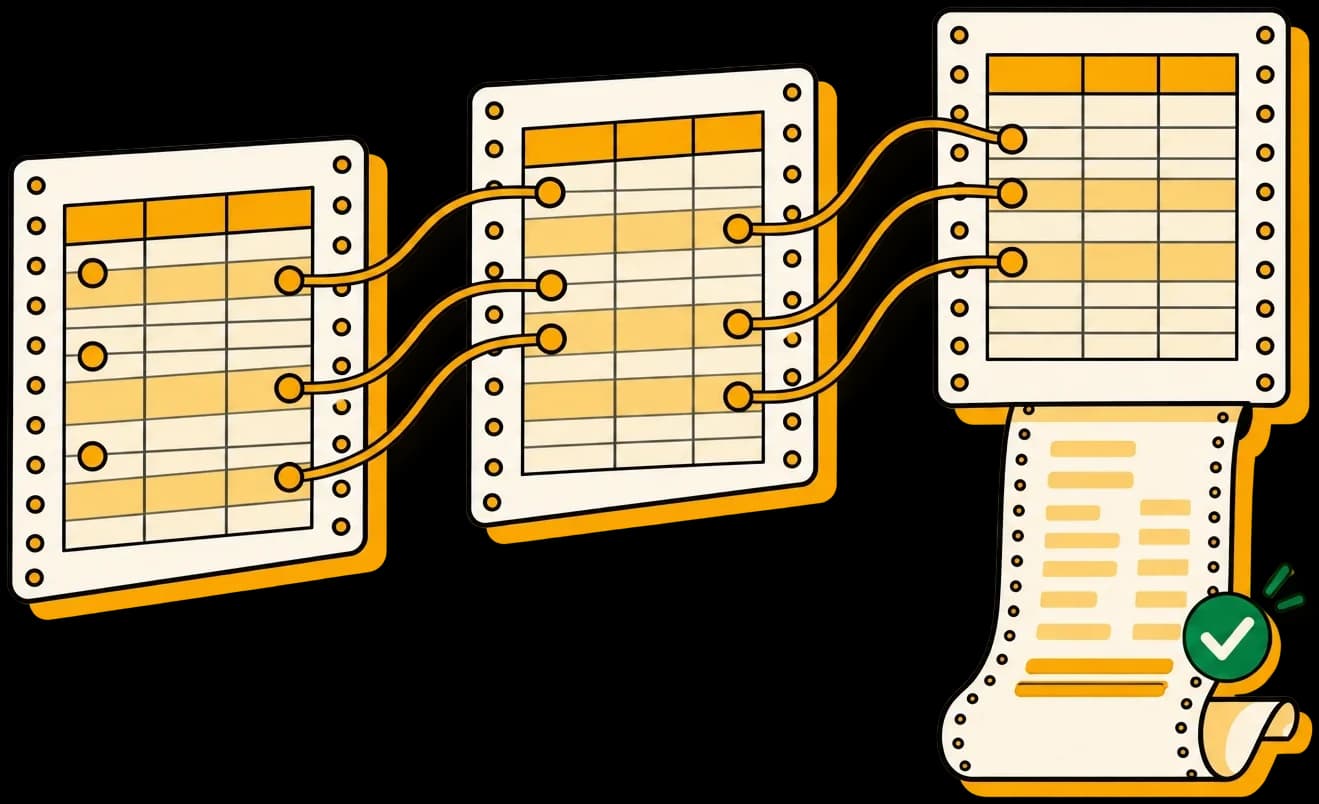
From DDL, a schema description, or (with the open-source library) straight from your database, parents before children.
Deterministic
Same schema, same seed, byte-identical rows. Commit the seed, not the data.
Defects on purpose
Ask for duplicates, typos, nulls or outliers at a stated rate, and the certificate lists where they are.
A request that works
Seed data for this schema: 200 accounts, users per account, subscriptions and invoices, with 2% of invoices failed and a few duplicate emails planted.
Four ways to get it
In your browser
Describe it in Misata Studio, shape it, and export. Two complete builds a month are free.
Try this promptFrom your AI assistant
Connect the MCP server to Claude, Cursor or VS Code and ask. No key needed to start.
Connect the MCP serverDownload one now
Twelve free multi-table sample databases, and premium ones with the ground truth inside.
Browse datasetsIn Python
The open-source library: pip install misata, MIT licensed, runs offline.
Read the docsHow the approaches compare
| Random-value library | Form-based generator | Asking a chatbot for rows | Misata | |
|---|---|---|---|---|
| Realistic single values (names, emails, addresses) | ||||
| Several tables whose keys always join | ||||
| Declared totals and rates come out exact | ||||
| Same rows every run (seeded) | ||||
| Shows a check of what it produced | ||||
| No code needed |
General approaches, not specific products; individual tools vary. A dash means some tools do it, or it takes work.
Questions
How do I generate test data for a relational database?
Give the generator your schema so it knows the keys. With Misata you can paste CREATE TABLE statements into Studio, ask your assistant through the MCP server, or run the open-source library against a dev database: it inserts parents before children and checks every foreign key afterwards.
Can I keep test data reproducible in CI?
Yes. Generation is deterministic for a given schema and seed, so CI can regenerate the same rows every run instead of storing large fixture files.
Can it include bad data on purpose?
Yes. Declare duplicates, typos, missing values or outliers at the rate you want. They are planted where you said and recorded, so a data-quality test knows exactly what it should catch.
Is it free?
The twelve sample databases are free to download with no signup, under CC0. Misata Studio gives every account 20 credits a month, which is two complete builds, with no card. The MCP server needs no key or account for datasets the assistant designs itself, and the Python library is open source under MIT.